Skip to content

Knitting ERP software for knit fabric and hosiery units

eManage Knitting ERP is production and accounts software for circular and flat knitting units. It controls knitting production orders with yarn issue by lot, roll-wise greige stock weighed from the scale, machine-wise output and yarn breaks, and job-work knitters with ITC-04. It is implemented on site by the eManage team from Ludhiana, Punjab.

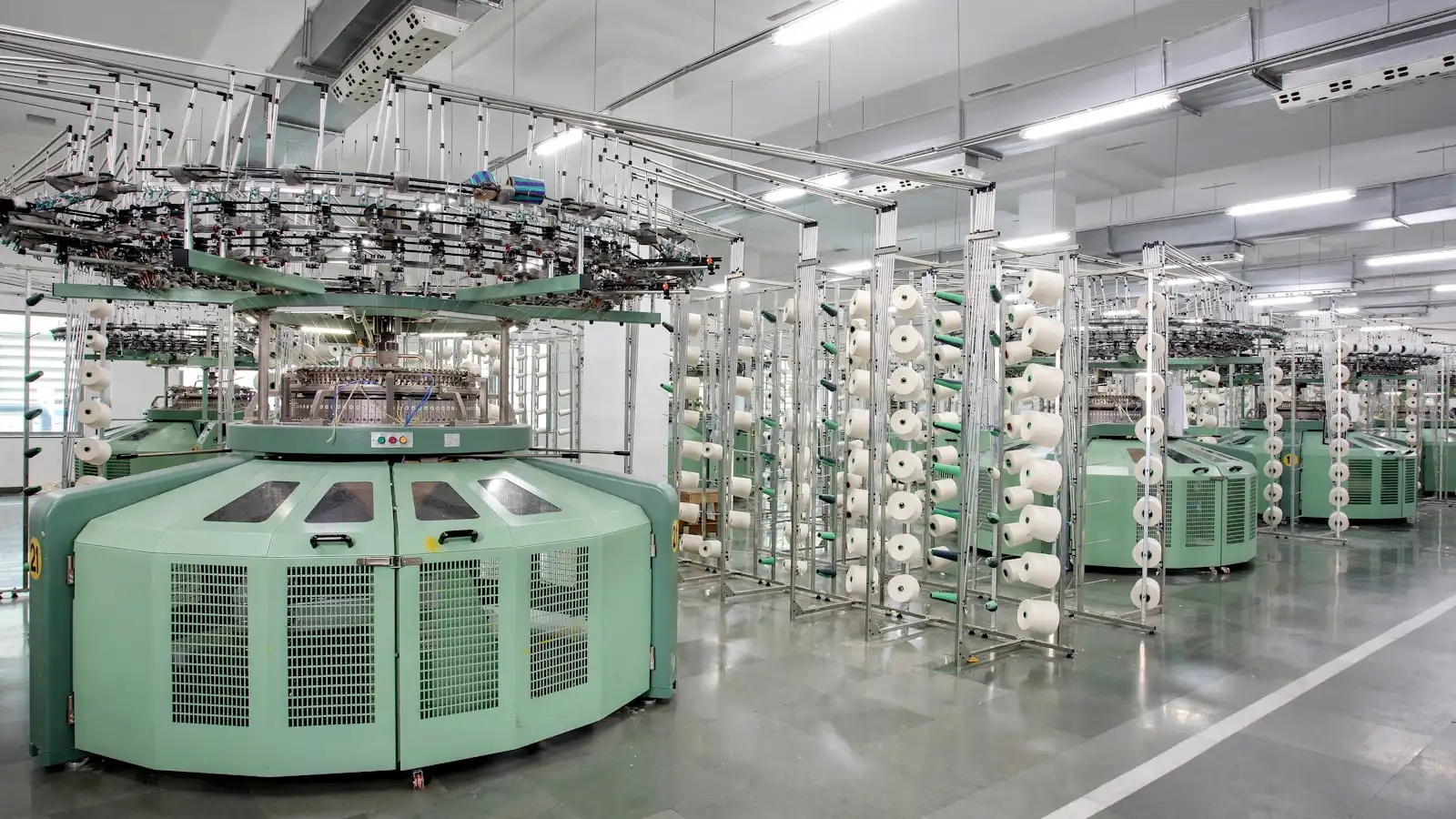
Knitting ERP shop floor
  • 500+ plantsRunning eManage since 2000
  • On-site implementationBy our own engineers
  • Support you can callNamed engineer, phone and WhatsApp
  • GST built inE-invoice, e-way bill, ITC-04
THE FLOW

Five steps on eManage, from material in to dispatch

1 YARN STORE2 ISSUE TO KPO3 KNITTING4 ROLL WEIGH5 GREIGE OUT
PLANT FLOW · KNITTING ERP
  1. 1 YARN STORE Lots · counts
  2. 2 ISSUE TO KPO Machine · operator
  3. 3 KNITTING Machines · RPM · breaks
  4. 4 ROLL WEIGH Scale · roll tag
  5. 5 GREIGE OUT Dyeing · job work
eManage CORE ONE DATABASE · GST · PAYROLL
WHY PLANTS SWITCH

Sound familiar? eManage fixes all four

Hosiery and knit-fabric plants lose margin in three places: yarn that goes to the floor and never comes back as fabric, rolls weighed by hand, and job-work bills that cannot be reconciled. This edition closes all three.

Roll weights in a register

Rolls are weighed on the floor and written in a book that nobody reconciles against the KPO.

Yield known at month end

Yarn issued vs fabric received is calculated long after the order has shipped.

Knitter shortages argued

Job-work knitters return less than they were given, and the difference is negotiated, not measured.

Yarn lots get mixed

Different yarn lots end up in the same order, and shade variation is found only after dyeing.

Here is how Knitting ERP handles each of these.

WHAT IT HANDLES

eManage covers every control point of a knitting unit

8 controls that come built into Knitting ERP, each tied to the same lot, order and ledger.

Illustration: control points covered by Knitting ERP

Knitting production orders

Yarn requirement planning

Roll-wise greige stock

Machine-wise production

Job-work knitters

Shortage alerts

GST billing & accounts

Workers & payroll

FREE DEMO

See eManage Knitting ERP with your own data

Send a few real documents before the call. An implementation engineer who knows your trade runs them through eManage, online or at your plant.

In the demo we show

  • A KPO with yarn lots from your stock
  • Roll weighing from a connected scale
  • Yarn sent to a knitter and received short
  • Yield and cost per kilo for the KPO

Book a free Knitting ERP demo

Name and phone are enough. We call within one working day.

We call within one working day. Your details are used only to arrange the demo; see the privacy policy.

WHAT CHANGES

What changes on the floor with eManage

The people and machines stay the same. Each movement is recorded where it happens, so the owner reads a screen instead of waiting for the month-end register.

Swipe the table sideways to see the eManage column.

Registers and Excel compared with eManage Knitting ERP
Area Running on registers / Excel Running on eManage Knitting ERP
Yarn issue Register at the store, reconciled monthly Scanned against the KPO; consumption live per machine and lot
Roll weight Read off the scale and written on the roll by hand Captured from the connected scale; roll tag printed
Machine output Shift sheet filled in by the supervisor Output, efficiency and breaks by machine, operator and shift
Yield per order Worked out at month end, if the yarn register matches Fabric kilos out against yarn kilos in, the day the KPO closes
Job-work knitters Challan book; shortage settled from memory Challan, receipt, shortage and ITC-04 per knitter
ON THE FLOOR

How eManage Knitting ERP works, stage by stage

Planning

One KPO, one yarn lot, one answer on yield

  1. 1

    The sale order creates KPOs with the full technical sheet. Yarn requirement is computed per KPO and reserved from specific lots.

  2. 2

    Yarn is issued to a machine against the KPO. Consumption and wastage are known per order, not per month.

  3. 3

    Yield per KPO is visible the day the order closes. Fabric kilos out are compared with yarn kilos in, lot by lot.

Yield reporting by order, machine and yarn lot

Knitting ERP, One KPO, one yarn lot, one answer on yield

Shop floor

Rolls weighed into stock, not written into a register

  1. 1

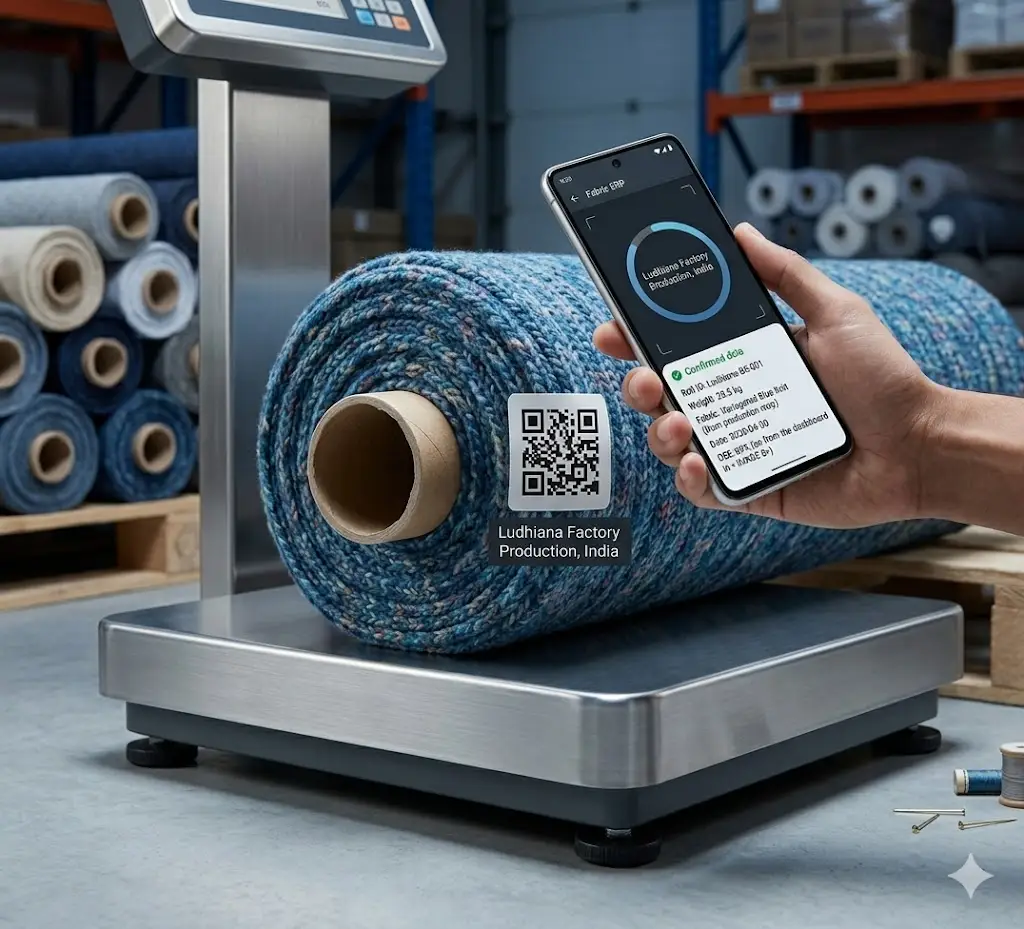
    The weigh scale is connected to eManage. The operator scans the KPO, the roll weight is captured and a roll tag prints.

  2. 2

    Rolls carry grade, machine, operator and shift. A complaint on a roll traces back to the exact machine run.

  3. 3

    Greige stock is live by roll. Dyeing is planned on what actually exists, not on a register total.

Weigh-scale integration with roll tags

Knitting ERP, Rolls weighed into stock, not written into a register

Job work

Settle knitters on kilos delivered, not kilos claimed

  1. 1

    Yarn to a job-work knitter goes out on a challan. Lot and weight are on it, and fabric comes back against it.

  2. 2

    Shortage beyond the agreed process loss is reported per knitter. The monthly reconciliation starts from this report, lot by lot.

  3. 3

    ITC-04 and job-work ledgers come from the same challans. Nothing is re-entered for the return.

Knitter-wise shortage and ITC-04

Knitting ERP, Settle knitters on kilos delivered, not kilos claimed

Read the fabric production visibility guide

REPORTS

eManage reports the owner reads every morning

Built from the floor's own entries, so they are current when you open them, on the desktop or the phone.

KPO status

Yarn issued, fabric received, balance and yield for every knitting programme.

Machine-wise production

Kilos per machine per shift, with downtime reasons.

Roll-wise greige stock

Every roll by quality, GSM, yarn lot, rack and weight.

Knitter pending register

Yarn and fabric at each job-work knitter, with age.

Shortage by knitter

Loss per knitter against the agreed allowance, lot by lot.

Cost per kilo

Yarn, knitting charges, shortage and overheads per KPO.

FIRST 90 DAYS

Your first quarter on eManage

  1. Yield on every KPOYarn-to-fabric yield is known the day the last roll is weighed.
  2. Knitters settled on kilos receivedShortage beyond the allowance is debited with lot-level evidence.
  3. Lots kept apartYarn lot travels on every roll, so mixed lots are blocked at issue.

EMANAGE KNITTING ERP

plants running eManage
500+
industry editions
12
years building one product line
26+
implemented on site by our own engineers
100%
GO-LIVE

eManage goes live in about six weeks, on site

How implementation works
  1. Week 1 Process study
  2. Weeks 2–3 Configuration
  3. Week 4 Data migration
  4. Weeks 4–5 Training by role
  5. Week 6 Go-live on site
  6. After Named support engineer

FAQ

eManage Knitting ERP questions

Something specific to your unit? Ask an implementation lead.

Does it handle both in-house machines and job-work knitters?

Yes. In-house machines log production by shift and operator against the KPO. Job-work knitters are handled through yarn-issue and fabric-receipt challans, with shortage per knitter and per lot compared against the agreed process loss. ITC-04 and the knitter's bill are prepared from those challans without a second entry.

Can the weigh scale be connected directly?

Yes. eManage reads weight from standard serial or network weigh scales, so roll weights are captured without typing. The printed roll tag carries the roll number, KPO, machine, weight and grade. The same scale entry updates greige stock, so the store and the dyeing planner see the roll the moment it is weighed.

We keep accounts in Tally and the yarn register in Excel. Can we migrate?

Yes. Party, item and ledger masters with opening balances are imported from Tally, and yarn lots and roll stock are loaded from your Excel registers at go-live. You can run accounts in eManage, or keep Tally for final accounts and export vouchers from eManage. The mapping is done on site during implementation.

Is it for a unit with 20 machines, or only large plants?

Both. A 20-machine unit enters shift output from one terminal and weighs rolls on one connected scale. Larger plants add scanning points per machine group and the eWarehouse app for roll stock. The edition is the same; go-live is typically 4 to 6 weeks with on-site implementation from Ludhiana.

What does Knitting ERP cost?

Pricing depends on the number of users, the modules you switch on and whether you run it on the cloud or your own server. It is quoted as a licence plus a one-time implementation fee after a demo on your own KPOs and knitter challans. Call +91 98156 23402 or write to info@emanage.in for a quote.

Does it connect to dyeing and garment production?

Yes. Greige rolls flow into the Dyeing ERP edition as batches, and dyed fabric flows into Garment ERP as cutting stock. A vertical unit runs all three on one database with one yarn stock and one set of accounts, so a roll traces from yarn lot to packed garment. See the guide at emanage.in/knitting-weaving-erp-production-visibility.

Related: Production visibility guideeWarehouse appDyeing ERP

Knitting ERP demo

See your yarn-to-roll flow on eManage

Bring one week of KPOs and knitter challans. We will walk through how they would run on eManage, machine by machine.

500+ plants live
12 editions
26+ years