Skip to content

Tractor parts ERP software for OEM and aftermarket supply

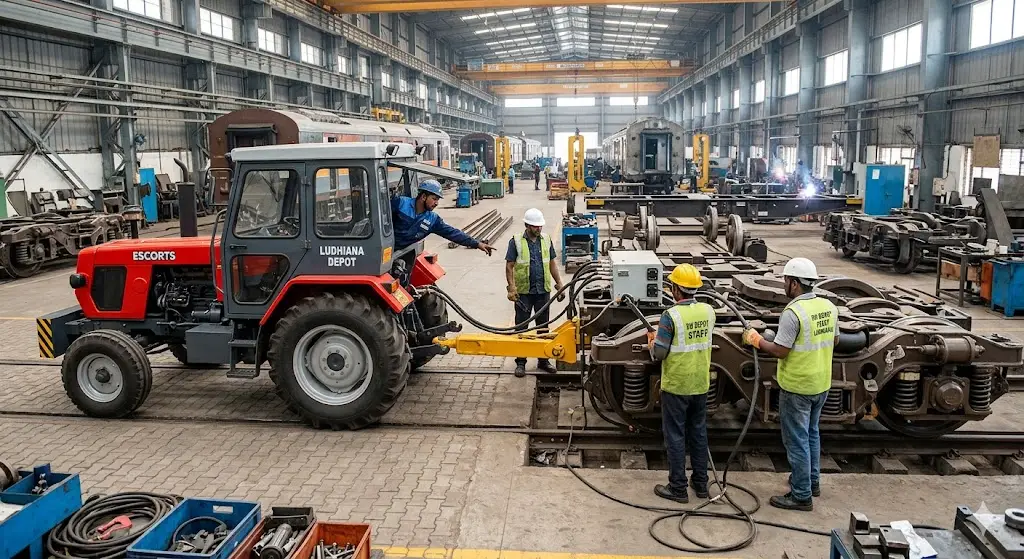
eManage Tractor Parts ERP is manufacturing and accounts software for tractor component suppliers. It controls OEM schedules and aftermarket orders on one multi-level BOM, lot routing through forging, heat treatment and machining with heat numbers, job-work processors with ITC-04, and inspection and PPAP records per lot. It is implemented on site by the eManage team from Ludhiana, Punjab.

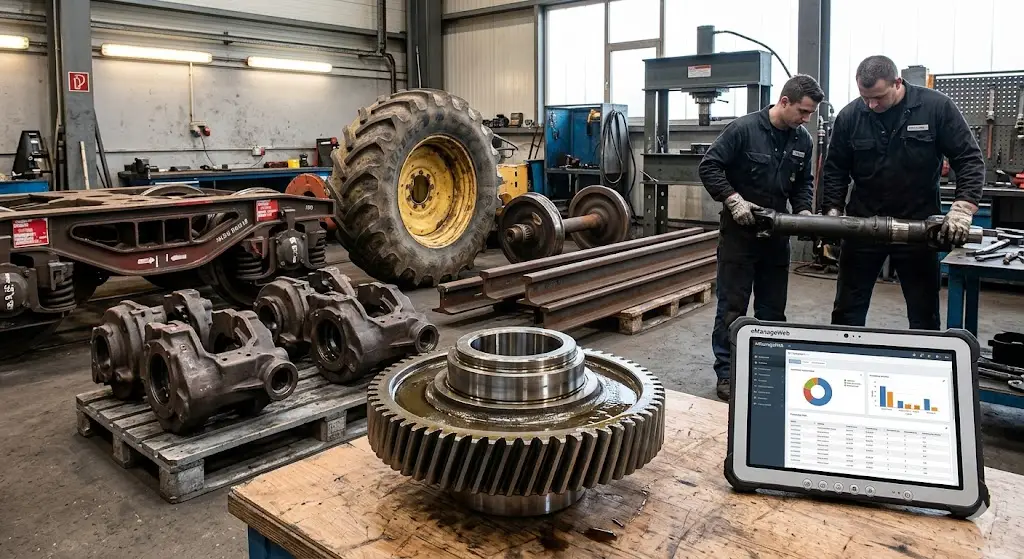
Tractor Parts ERP shop floor
  • 500+ plantsRunning eManage since 2000
  • On-site implementationBy our own engineers
  • Support you can callNamed engineer, phone and WhatsApp
  • GST built inE-invoice, e-way bill, ITC-04
THE FLOW

Five steps on eManage, from material in to dispatch

1 SCHEDULE IN2 FORGING3 MACHINING4 INSPECTION5 DISPATCH
PLANT FLOW · TRACTOR PARTS ERP
  1. 1 SCHEDULE IN OEM · aftermarket
  2. 2 FORGING Heat no. · lots
  3. 3 MACHINING Routing · job card
  4. 4 INSPECTION In-process · final
  5. 5 DISPATCH OEM · dealer sets
eManage CORE ONE DATABASE · GST · PAYROLL
WHY PLANTS SWITCH

Sound familiar? eManage fixes all four

Tractor component makers serve two very different customers: OEMs with monthly schedules and tight inspection documents, and the aftermarket with hundreds of part numbers in small lots. This edition is built to run both without two sets of books.

Multi-level BOMs in Excel

Assemblies, sub-assemblies and bought-out parts are planned on spreadsheets.

OEM and aftermarket clash

OEM schedules and small aftermarket orders compete for the same machines and stock.

Hundreds of part numbers

Aftermarket catalogues with cross-references are hard to keep in stock.

Forging and heat treat outside

Parts go out for processing and the lot history is lost.

Here is how Tractor Parts ERP handles each of these.

WHAT IT HANDLES

eManage covers every control point of a tractor parts unit

8 controls that come built into Tractor Parts ERP, each tied to the same lot, order and ledger.

Illustration: control points covered by Tractor Parts ERP

Multi-level BOM & routing

OEM schedule lines

Aftermarket orders

Forging & heat treatment

Machining shop control

Inspection & PPAP

Part-wise costing

GST, e-invoice & accounts

FREE DEMO

See eManage Tractor Parts ERP with your own data

Send a few real documents before the call. An implementation engineer who knows your trade runs them through eManage, online or at your plant.

In the demo we show

  • A multi-level BOM exploded for one OEM order
  • Aftermarket orders against catalogue stock
  • Forging sent out and received back
  • Part-wise cost

Book a free Tractor Parts ERP demo

Name and phone are enough. We call within one working day.

We call within one working day. Your details are used only to arrange the demo; see the privacy policy.

WHAT CHANGES

What changes on the floor with eManage

The people and machines stay the same. Each movement is recorded where it happens, so the owner reads a screen instead of waiting for the month-end register.

Swipe the table sideways to see the eManage column.

Registers and Excel compared with eManage Tractor Parts ERP
Area Running on registers / Excel Running on eManage Tractor Parts ERP
OEM schedule Typed into Excel; shortfall worked out by hand Loaded per part; netted against stock, WIP and open jobs
Aftermarket orders Dealer codes matched to parts from memory Catalogue codes mapped to the manufactured part; one stock
Heat number On the forging supplier's invoice only Carried on the lot through every operation to the certificate
Rejection and debit notes Debit note accepted; reason never traced Rejection by reason; debit note matched to the invoice for GST
Dealer credit Checked when the cheque bounces Credit limit and outstanding enforced at order entry
ON THE FLOOR

How eManage Tractor Parts ERP works, stage by stage

Planning

Schedule in, material plan out

  1. 1

    OEM schedules are imported per part number. The system nets them against finished stock, WIP and open job orders to show the shortfall.

  2. 2

    The multi-level BOM explodes the shortfall. Forgings, bar stock, bought-outs and job work are listed with lead times per supplier.

  3. 3

    Purchase indents and job orders are raised from the plan. The schedule screen shows where each line stands.

Schedule netting against stock and WIP
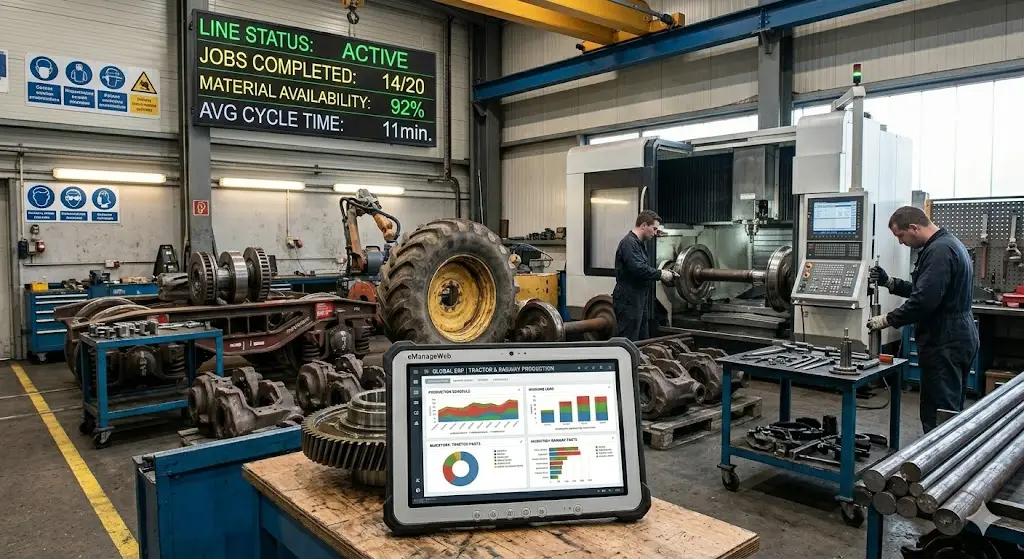
Tractor Parts ERP, Schedule in, material plan out

Shop floor

One job card from forging to final inspection

  1. 1

    Each lot moves through its routing on a job card. Operation completion, rejection and rework are entered at the stage by the operator.

  2. 2

    Outside heat treatment and plating go on job-work challans. Receipts close the operation and update the lot quantity.

  3. 3

    In-process inspection results are recorded against the job card. The final lot record is complete without a separate file.

Lot-wise routing with rejection by reason

Tractor Parts ERP, One job card from forging to final inspection

Aftermarket

Hundreds of part numbers, small lots, one stock

  1. 1

    Dealer orders come in on your catalogue codes. The system maps them to the manufactured part, picks from stock and packs by set.

  2. 2

    Minimum stock levels trigger make-to-stock jobs per part. Fast movers do not run out during the season.

  3. 3

    Dealer-wise outstanding, schemes and credit limits are enforced at order entry. The order is held until the limit is cleared.

Catalogue cross-reference and set packing

Tractor Parts ERP, Hundreds of part numbers, small lots, one stock
REPORTS

eManage reports the owner reads every morning

Built from the floor's own entries, so they are current when you open them, on the desktop or the phone.

BOM explosion

Requirements for every level, from assembly to raw material.

OEM schedule status

Schedule lines, dispatches and shortfall by OEM.

Aftermarket fill rate

Orders fulfilled from stock by part and dealer.

Machine shop load

Operations queued by machine and due date.

Inspection and PPAP

Lot-level inspection records for OEM audits.

Part-wise cost

Material, forging, machining and job work per part.

FIRST 90 DAYS

Your first quarter on eManage

  1. One plan for OEM and aftermarketBoth demands netted together against stock and capacity.
  2. Catalogue stock under controlFast and slow aftermarket parts visible by cross-reference.
  3. Lot history kept through job workForging and heat-treat lots stay traced.

EMANAGE TRACTOR PARTS ERP

plants running eManage
500+
industry editions
12
years building one product line
26+
implemented on site by our own engineers
100%
GO-LIVE

eManage goes live in about six weeks, on site

How implementation works
  1. Week 1 Process study
  2. Weeks 2–3 Configuration
  3. Week 4 Data migration
  4. Weeks 4–5 Training by role
  5. Week 6 Go-live on site
  6. After Named support engineer

FAQ

eManage Tractor Parts ERP questions

Something specific to your unit? Ask an implementation lead.

Can one part number serve both an OEM schedule and aftermarket orders?

Yes. The manufactured part is one item with one BOM and one stock. OEM part numbers and aftermarket catalogue codes are aliases on it, so demand from both sides is planned together, and the owner sees one stock figure instead of two registers that never agree.

How are rejections and OEM debit notes handled?

Rejections are recorded by reason at the operation or at the customer end. Customer rejections create sales returns, and the debit note is matched against the original invoice for GST. Rejection PPM is reported per part and per month, so the quality meeting works from the same numbers the accounts use.

Our heat treatment and plating are done outside. Is that tracked for ITC-04?

Yes. Lots sent out go on a job-work challan with quantity and heat number. Receipts are matched against it, shortage is tracked per processor, and ITC-04 is prepared from the same challans. The processor's bill is checked against the received quantity before payment, and the lot keeps its heat number.

Can we migrate from Tally and Excel?

Yes. Party, item and ledger masters with opening balances are imported from Tally, and BOMs, routings and dealer price lists are loaded from Excel at go-live. Units that keep Tally for final accounts export vouchers from eManage; others run accounts in eManage. The mapping is done on site during implementation.

Is the system suitable for a 60-person unit?

Yes. Units from a few machines to several hundred people run the same edition. Floor entries are made from a few shared terminals or tablets, the eGate app records challans at the gate, and go-live typically takes 4 to 6 weeks with on-site implementation from Ludhiana.

What does Tractor Parts ERP cost?

Pricing depends on the number of users, the modules you switch on and whether you run it on the cloud or your own server. It is quoted as a licence plus a one-time implementation fee after a demo on your own OEM schedules and BOMs. Call +91 98156 23402 or write to info@emanage.in for a quote.

Related: Auto Component ERPeGate gate-pass appeWarehouse app

Tractor Parts ERP demo

Bring an OEM schedule and a BOM. We run them live on eManage.

A session on your part numbers: schedule intake, material planning, routing and the inspection record for one lot.

500+ plants live
12 editions
26+ years